Ambient Storage in Jeddah: When Room-Temperature Warehousing Beats Refrigeration
Jeddah’s port makes it a natural hub for imports flowing into the Kingdom, yet many businesses default to expensive refrigeration when they simply do not need it. Ambient storage, the practice of holding goods at stable room temperature, is often the smarter and cheaper choice. The trick is knowing which products belong on a dry shelf and which demand a cold room.
In this guide I want to reframe the conversation. Instead of asking whether to refrigerate, ask what each product actually requires. That single shift in thinking can trim your warehousing bill dramatically while keeping stock in perfect condition throughout 2026.
What Is Ambient Storage, Really?
Ambient storage holds inventory in a temperature-managed but non-refrigerated space, typically kept around 15°C to 25°C with controlled humidity. It suits any product stable at normal indoor conditions. Think canned food, packaged snacks, textiles, electronics, and household goods.
The value lies in cost and simplicity. Without compressors running around the clock, ambient facilities consume far less energy and pass those savings on. For high-volume, non-perishable stock, that efficiency compounds fast.
The Jeddah Climate Factor
Jeddah’s coastal heat and humidity change the calculation. A product that stores happily in a cool European warehouse can suffer near the Red Sea. Good ambient facilities manage this with insulation, ventilation, and dehumidification rather than full refrigeration, striking a balance between protection and cost. Quality providers offer purpose-built Ambient Storage in Jeddah designed for exactly this environment.
Ambient Versus Chilled: Drawing the Line
The hardest decisions sit at the boundary between ambient and chilled. Some products tolerate both; others fail silently if you guess wrong. Chocolate, for instance, survives ambient conditions in winter but needs cooling in a Jeddah summer.
| Factor | Ambient Storage | Chilled Storage |
|---|---|---|
| Temperature | 15°C to 25°C | 0°C to 8°C |
| Energy cost | Low | High |
| Ideal goods | Dry, canned, packaged | Dairy, produce, medicine |
| Setup complexity | Simple | Refrigeration and monitoring |
When temperature-sensitive items enter your range, the right answer is not to compromise. Move them to dedicated Chilled Storage rather than gamble on an ambient shelf during peak heat.
Which Products Thrive in Ambient Conditions?
A well-organized ambient warehouse can hold a huge share of a typical retailer’s catalogue. Here are categories that rarely need refrigeration when packaged correctly.
- Canned and jarred foods
- Rice, flour, pasta, and grains
- Bottled beverages and water
- Clothing, footwear, and home textiles
- Sealed electronics and appliances
- Cleaning products and paper goods
An Original Tip on Shelf Life
Here is something operators learn the hard way: humidity, not heat, ruins more ambient stock in Jeddah than anything else. Cardboard softens, labels peel, and metal cans corrode when moisture creeps in. Before choosing a facility, ask about their dehumidification and airflow, not just temperature. A dry warehouse at 24°C protects goods better than a damp one at 20°C.
How Do You Decide Between Ambient and Refrigerated Storage?
Rather than guessing, run each product through a short checklist. This structured approach prevents both spoilage and overspending.
- Check the manufacturer’s stated storage temperature on the packaging.
- Consider the worst-case local condition, a summer afternoon in Jeddah.
- Assess how long the item will sit in storage before dispatch.
- Factor in packaging, since sealed items resist humidity better.
- Weigh the cost gap against the risk of spoilage.
If the analysis leaves you uncertain, consult experienced warehouse teams. Working with trusted professionals who audit inventory for a living saves both money and guesswork.
Efficiency and Standards in 2026
Warehousing standards continue to tighten as Saudi Arabia modernizes logistics under Vision 2030. Facilities increasingly follow structured food-safety and storage principles. The FAO food safety resources outline handling practices that even ambient operators should respect for packaged food.
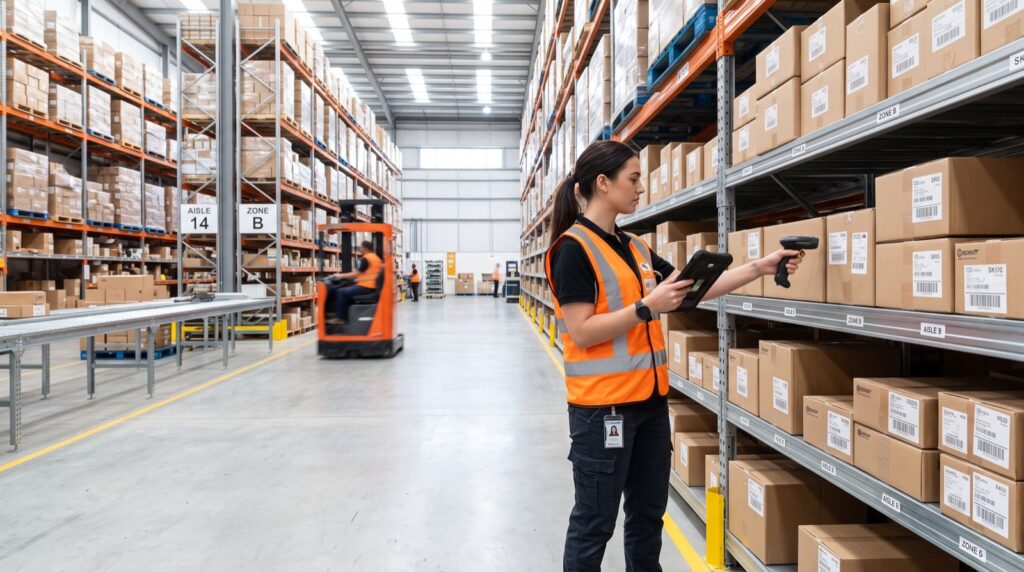
Efficiency also drives layout decisions. Smart ambient warehouses use these approaches to keep stock moving and costs low.
- First-in, first-out rotation to prevent aging stock
- Zoned shelving that groups goods by turnover speed
- Barcode tracking for real-time inventory accuracy
- Cross-docking to reduce dwell time near the port
Layout Choices That Protect Ambient Stock
Where you place goods inside an ambient warehouse matters as much as the temperature itself. Heat rises, doors leak warm air, and sunlight streams through skylights. A thoughtful layout works around all three.
Keep the most sensitive stock away from loading doors and exterior walls, where Jeddah’s heat penetrates first. Reserve the cooler, shaded interior for items with tighter tolerances. This zero-cost decision often prevents damage that expensive cooling would otherwise be needed to fix.
Simple Rules Warehouse Teams Follow
- Store heat-sensitive goods on lower shelves, where air stays cooler
- Keep aisles clear so airflow reaches every pallet
- Position fast-moving stock near dispatch to limit dwell time
- Shield goods from direct light through skylights or windows
The Hidden Savings of Getting Storage Right
Retailers often focus only on the monthly rate, but ambient storage delivers savings that never appear on the invoice. Lower energy use, fewer spoiled units, and simpler handling all add up over a year.
Consider a Jeddah importer moving packaged snacks and household goods. Shifting that stock from unnecessary chilled space to a well-run ambient warehouse can cut storage costs by a large margin while quality stays identical. That freed-up budget can fund faster delivery or better packaging instead.
There is also a sustainability angle. Ambient warehousing consumes a fraction of the electricity that refrigeration demands, which aligns neatly with the Kingdom’s efficiency goals for 2026. Storing goods at the right temperature, and no colder, is quietly one of the greenest logistics decisions a business can make.
Frequently Asked Questions
What temperature range defines ambient storage?
Ambient storage typically maintains 15°C to 25°C with managed humidity. It relies on insulation and ventilation rather than refrigeration, making it far cheaper to run while still protecting non-perishable goods.
Is ambient storage safe for food?
Yes, for shelf-stable food such as canned, dried, and sealed packaged products. Perishables like dairy, fresh meat, and produce need chilled or frozen storage instead. Always follow the manufacturer’s storage instructions.
Why choose ambient storage in Jeddah specifically?
Jeddah’s heat and humidity make good ambient facilities valuable. They control moisture and airflow so goods stay stable near the coast, offering a cost-effective alternative to refrigeration for suitable products.
Can I mix ambient and chilled storage in one contract?
Often yes. Many providers offer multi-temperature warehousing so you can keep dry stock ambient and perishables chilled under a single agreement, simplifying logistics and billing.
Common Mistakes to Avoid
Even experienced teams slip up with ambient storage. Awareness of the usual pitfalls saves both stock and money over a busy year.
- Assuming ambient means unmanaged, when humidity still needs control
- Storing chocolate or heat-sensitive goods ambient through summer
- Ignoring stock rotation until old inventory quietly expires
- Overpacking shelves so airflow cannot circulate
Each of these is easy to fix once spotted. The real cost comes from leaving them unaddressed for months, by which point damaged stock has already shipped to customers.
Final Thoughts
Ambient storage in Jeddah is not a downgrade from refrigeration; it is the correct choice for the majority of packaged and dry goods. By matching each product to its true requirement, controlling humidity, and partnering with a facility that understands coastal conditions, you protect your inventory and your margins at once. In 2026, the businesses that win are the ones that store smart, not just cold.